Mandarin Oriental Hotels: A Luxury Travel Advisor's Complete Guide (2026)
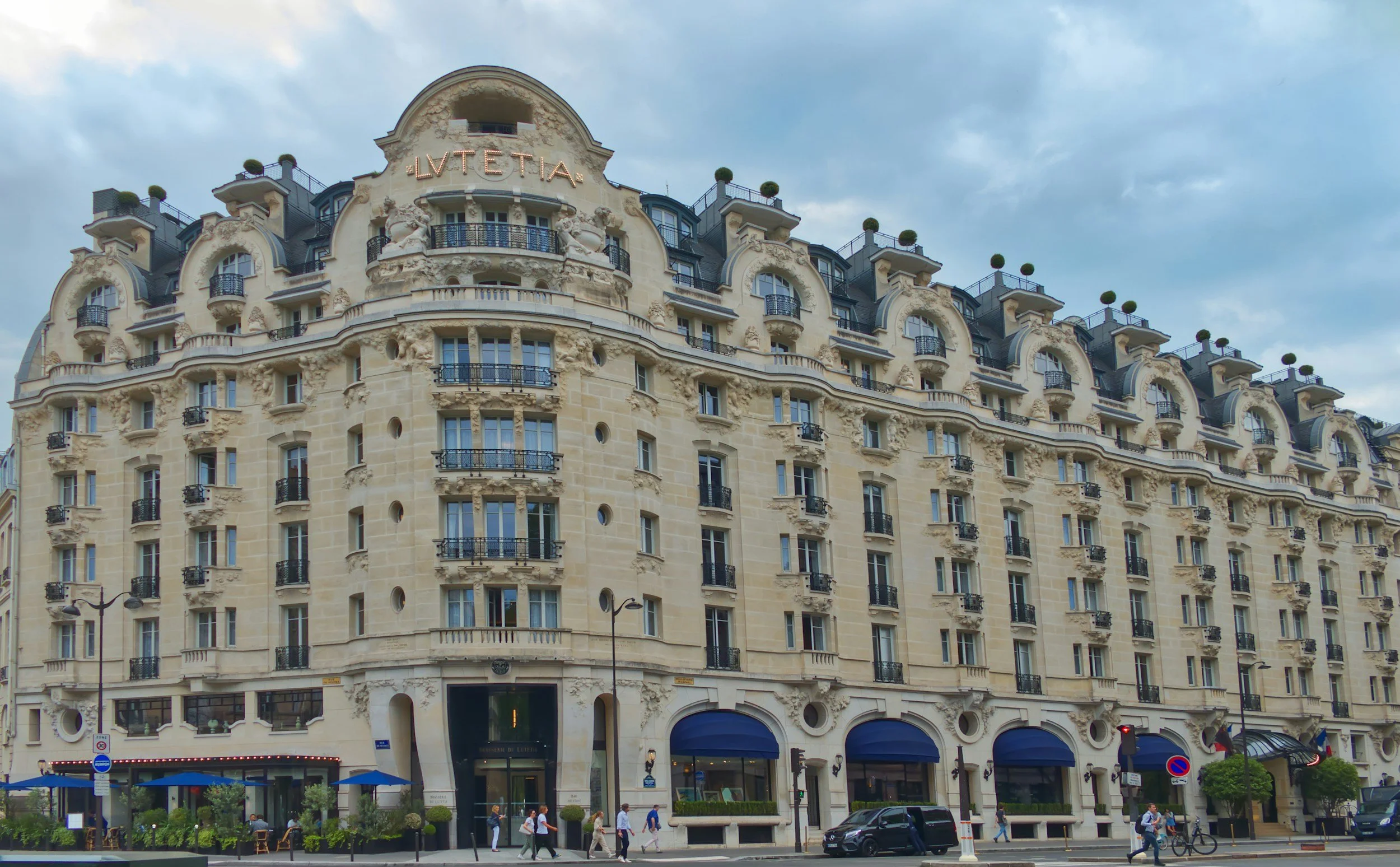
Mandarin Oriental Lutetia, Paris
Mandarin Oriental has been operating since 1876 and remains one of the most consistent luxury hotel brands in the world. As a luxury travel advisor, I put Mandarin Oriental in itineraries more than most people expect — particularly for Europe and Asia, where the brand has some of its strongest properties. This guide covers who the brand is for, how it compares to Four Seasons and Rosewood, the properties I recommend most, and exactly what you get when you book through a Mandarin Oriental Fan Club advisor.
Who Stays at Mandarin Oriental
The Mandarin Oriental guest is a high-frequency traveler who has stayed enough places to have preferences. They are not chasing points or status. They are choosing on experience.
They want the hotel to feel like part of the city, not dropped into it. They want to eat well inside the building. They appreciate restraint in design. They notice when a staff member anticipates something before being asked.
In cities, the guest skews toward couples and solo travelers. At resort properties like Costa Navarino in Greece, the brand draws multigenerational families. The common thread is someone who has decided what they value in a hotel stay and is booking accordingly.
My experience: clients who try Mandarin Oriental once tend to return to the brand. That level of consistency across properties is rarer than it sounds.
Why It Works for Families
This gets overlooked, so I want to say it clearly: Mandarin Oriental is one of the better luxury hotel groups for families — and not in a way that compromises the experience for the adults.
Room configurations. Connecting rooms are available across most properties and should be requested at booking rather than hoped for at check-in. Tokyo has a dedicated connecting room category and two-bedroom suites from 90 square meters. Bangkok will connect a one-bedroom suite with an additional room to create a proper family suite. London Hyde Park offers multiple interconnecting options with enough separation that parents and kids each have their own space. Knowing which configuration to request at which property is part of what I help with.
Families by M.O. The brand runs a standard family package at participating properties: second room at half price, curated children's amenities on arrival, and special touches throughout the stay. Properties layer on top of this individually. Bangkok provides cribs, sterilizers, and baby bath items on request, with professional nurses from local hospitals available for babysitting until midnight. London offers in-room movie setups with tipi tents and PlayStation 5 on request. Tokyo's concierge team arranges babysitting, children's activity bookings, and age-appropriate restaurant recommendations throughout the city.
Kids clubs at resort properties. Costa Navarino's Coral & Friends Kids Club serves ages 4 to 12 with structured daily programming. Bangkok's Sanook Sanook club runs afternoons and evenings from 3pm to 11pm and covers ages 3 to 14 — the evening hours mean parents can do a long dinner or spa treatment without cutting the night short.
The service culture translates. Staff anticipate what kids need before being asked. Dietary preferences get noted and carried across meals. The attentiveness that defines the adult experience applies equally to families. Neither Bangkok nor Tokyo feels like it is tolerating children. They are set up for them.
The bottom line: you do not have to choose between staying somewhere excellent and staying somewhere that works for your kids. At Mandarin Oriental, those are usually the same booking.
How Mandarin Oriental Compares to Four Seasons, Rosewood, and Peninsula
If you know other luxury brands, here is where Mandarin Oriental sits relative to each.
Four Seasons is the closest comparison in scale and client base. Four Seasons is engineered for consistency — you know exactly what you are getting in any city. Mandarin Oriental is more design-led, more locally inflected, and occasionally more interesting. For clients who want zero surprises, Four Seasons. For clients who want the hotel to feel rooted in its specific place, Mandarin Oriental.
Rosewood is the most direct strategic competitor right now. Both brands favor historic buildings and lean into sense of place. The difference: Rosewood leads with the story of the building. Mandarin Oriental leads with service and layers the building's story underneath. Rosewood is having a significant brand moment. Mandarin Oriental is quieter about its expansion, which is consistent with how they have always operated.
Peninsula is the comparison that does not come up enough. Asian heritage, deep service culture, strong urban portfolio — the guest profile overlaps significantly. The difference is register: Peninsula is more formal and traditional. Mandarin Oriental is warmer and more contemporary in feel. For clients with strong Peninsula loyalty, Mandarin Oriental is worth introducing as an alternative.
St. Regis and Ritz-Carlton both compete for the same customer in many cities. St. Regis leans on legacy and branding. Ritz-Carlton is broader and less consistent at the top end. When a client is choosing between one of those and a Mandarin Oriental in the same city, I will almost always recommend the Mandarin Oriental. The service culture is tighter and the design is more considered.
Where the Brand Started
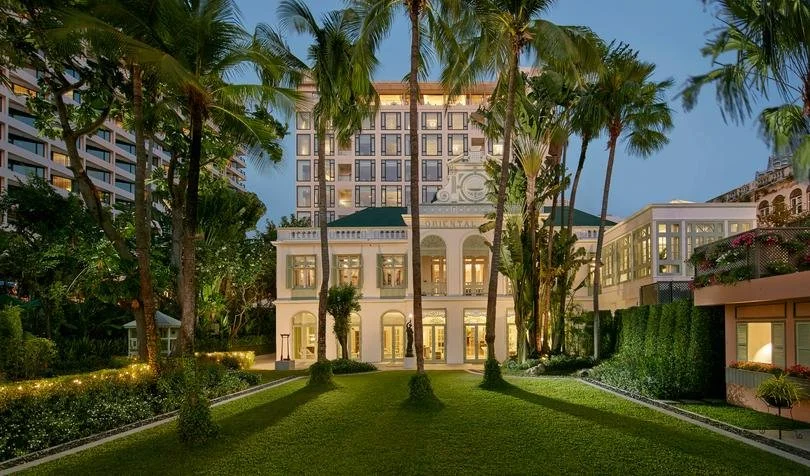
Mandarin Oriental Bangkok, home of the famous Chao Phraya River suites
The story begins at two addresses.
The Mandarin opened in Hong Kong in 1963 — at the time, the tallest building on the island, with the fastest elevators in Hong Kong and bathtubs in every guest room. That last detail sounds unremarkable now. In 1963, it was a statement.
The Oriental in Bangkok opened in 1876 as Thailand's first luxury hotel, the first to open on the Chao Phraya River, the first to introduce a jazz bar in Thailand, and the property that launched the modern hotel spa concept in 1993. It has hosted royalty, writers, and artists for 150 years. Somerset Maugham had a suite. Joseph Conrad stayed there. The Authors' Wing is still named for them.
The two merged into Mandarin Oriental Hotel Group in 1985, and that dual origin is still the operating philosophy today. Hong Kong's precision and innovation. Bangkok's warmth and intuition. Both in every building.
The current CEO, Laurent Kleitman, came to the role from LVMH, where he ran Parfums Christian Dior. He talks about the brand in terms of what he calls "unscripted moments." The story he tells: dining at the Bangkok property with his family, his son stained his shirt. A staff member quietly removed it without a word. By the end of the meal it was back on the chair, cleaned and pressed. No announcement. Just attention. That is the standard they train toward.
What's New: Recent Openings and Historic Hotel Takeovers
Mandarin Oriental currently operates just over 40 hotels worldwide — small by luxury group standards. The goal is to double to 100 by 2033. They are not filling gaps with any available building. They are acquiring icons.
Two significant additions in the past 18 months:
Hôtel Lutetia, Paris. The Lutetia opened in 1910 on the Left Bank, built to complement Le Bon Marché department store across the street. It was occupied by German forces during World War II, and when Paris was liberated it became the city's center for returning deportees — a fact that is woven into its identity. Mandarin Oriental assumed management in 2024. It is now the only palace hotel on the Left Bank, and the brand's second Paris address after their property on the Rive Droite.
The Conservatorium, Amsterdam. A former bank and music conservatory in the Museumplein, rebranded as Mandarin Oriental Conservatorium in January 2026. The glass atrium is one of the more beautiful hotel public spaces in Europe. The Akasha Spa is the largest hotel spa in Amsterdam at 1,000 square meters. Yotam Ottolenghi opens his first Dutch restaurant inside the property later in 2026. The brand's first property in the Netherlands.
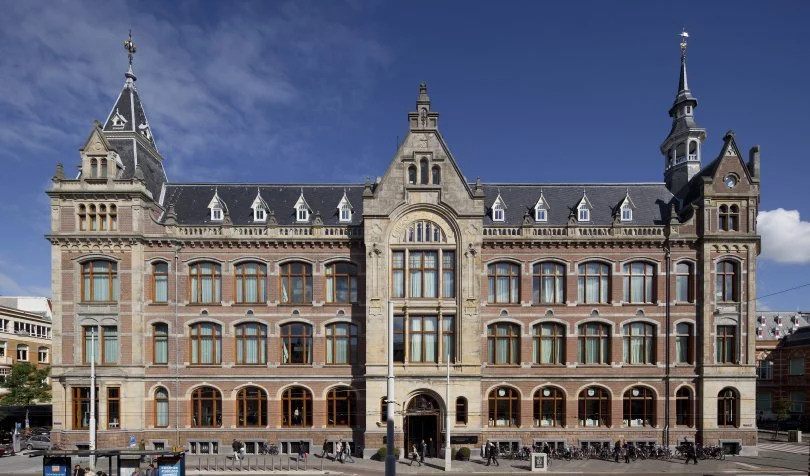
Mandarin Oriental Conservatorium Amsterdam is known for it’s beautiful glass atrium
Coming up: Mallorca opens spring 2026. Cortina late 2026. Rome, Budapest, Puerto Rico, Grand Cayman, and a Mexico property curated by sculptor Bosco Sodi are all in development for 2027 and 2028.
Best Mandarin Oriental Hotels in Europe
Mandarin Oriental Lutetia, Paris
The only palace hotel on the Left Bank. Saint-Germain-des-Prés, steps from the Luxembourg Gardens, around the corner from the best food markets and cheese shops in the city. If your Paris trips tend toward the 6th arrondissement rather than the 1st, this is the right base. Deeply Parisian in a way that the Rive Droite properties are not.
Mandarin Oriental Conservatorium, Amsterdam
Former bank and music conservatory in the Museumplein. 129 rooms, glass atrium, largest hotel spa in Amsterdam, and Yotam Ottolenghi opening his first Dutch restaurant inside the property later this year. Steps from the Rijksmuseum and the Van Gogh Museum. Book it before the Ottolenghi opening makes availability harder.
Mandarin Oriental, Vienna
Opened October 2025. Brand new and already one of the stronger debuts I have seen from this group. A restored Art Nouveau courthouse in the First District, within the UNESCO-listed historic center. One of the lobby lounges was designed in collaboration with Van Cleef & Arpels — hand-stitched embroidery, bespoke furniture. Four dining venues under a single executive chef. A spa that draws on Viennese musical heritage. Seven years in development. It feels like it.
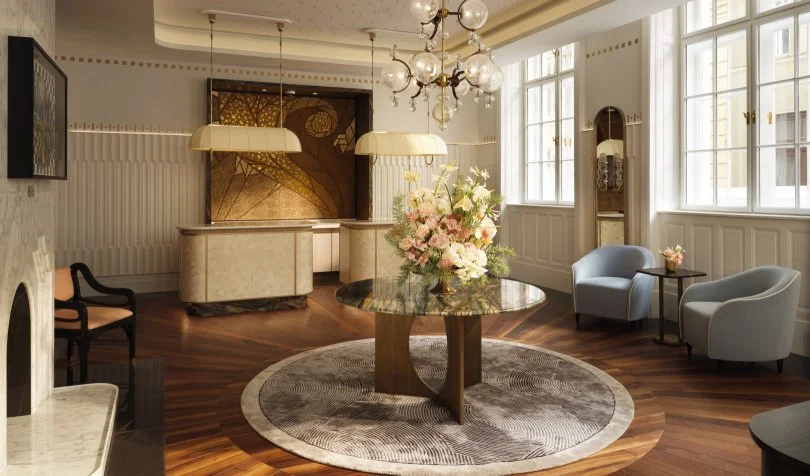
Mandarin Oriental Vienna Art Nouveau Lobby
Mandarin Oriental, Prague
A 14th-century monastery in Malá Strana, below Prague Castle. The spa is inside a former Renaissance chapel — the only one in the world. Rooms have exposed beams, parquet floors, and period windows. 99 rooms, quiet, extremely well-run. Afternoon tea is served in a former cloister corridor. If you want Prague without the grand hotel feel, this is the one.
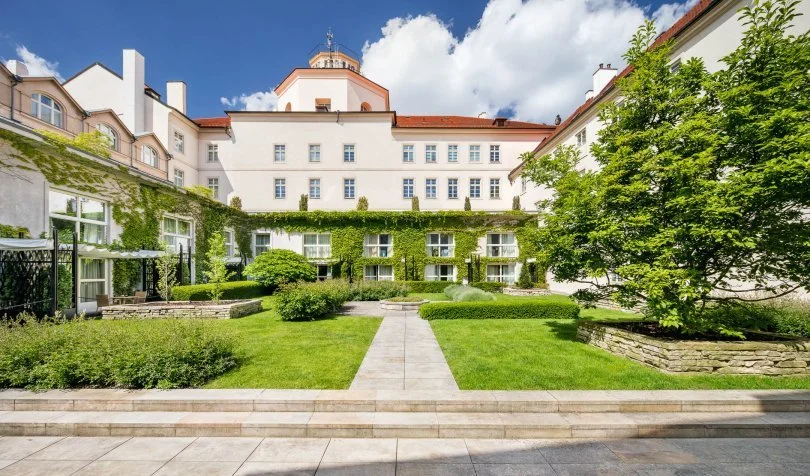
Mandarin Oriental Prague monastery Mala Strana
Mandarin Oriental Hyde Park, London
A century-old property on Knightsbridge, directly facing the park. The only hotel in London with Forbes Five-Star recognition for both the hotel and the spa. Hyde Park on one side, Harvey Nichols a five-minute walk. Excellent connecting room options for families. If someone asks me for a classic London hotel that will not disappoint, this is what I say.
Mandarin Oriental, Lake Como
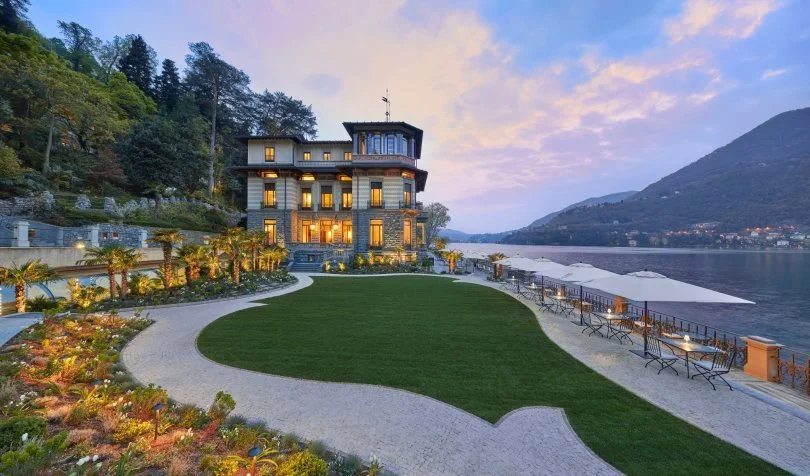
Mandarin Oriental Lake Como in Blevio on the western shore
Small property in Blevio, a village on the western shore of the lake — not Como town, not Bellagio, quieter than both. Around 74 rooms and suites, feels more like a private residence than a hotel. Views directly onto the lake, a boat dock, a spa drawing on local thermal traditions. For Como, the comparison is usually between this, Villa d'Este, and Passalacqua: Villa d'Este is grander and more social, Passalacqua has the best food, Mandarin Oriental is the most serene. For guests who want to actually decompress, this is my recommendation.
Mandarin Oriental, Costa Navarino
Not a Greek island. A resort on the southwest Peloponnese mainland, on the Bay of Navarino — one of the least crowded stretches of Mediterranean coastline. 48 pool villas and 51 suites, all with bay views. The spa won World's Best Resort Spa in 2025 and holds a Forbes Five-Star rating, the only one in the Peloponnese. Michelin-starred chef dinners and wine events throughout the season. The Coral & Friends Kids Club is well-run and gives parents real time. Works for families and couples equally well.
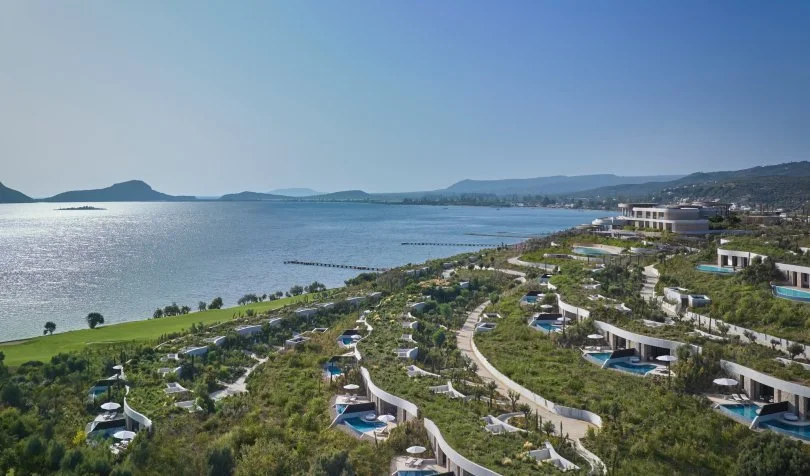
Mandarin Oriental Costa Navarino pool villa looking out on Navarino Bay
Mandarin Oriental, Marrakech
Outside the medina, in 20 acres of olive groves in the Amelkis district. Traditional Moroccan materials throughout: zellige tile, carved plaster, hand-loomed textiles. The medina-versus-outside question is the first one to answer in Marrakech. Inside is more immersive and chaotic. Outside is more comfortable and quieter. The Mandarin is firmly outside, with a shuttle into the souks when you want it. Interconnecting rooms and curated kids' amenities available for families.
Best Mandarin Oriental Hotels in Asia
Mandarin Oriental, Bangkok
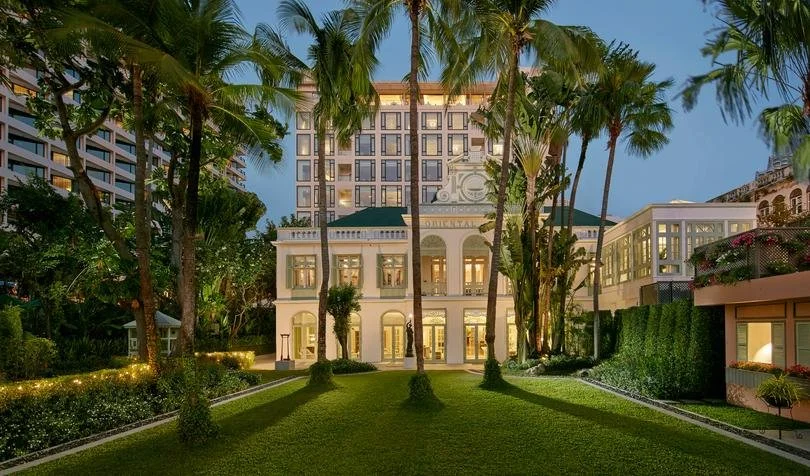
Mandarin Oriental Bangkok, is renowned for their Chao Phraya River suites
This is where the brand began. The Authors' Wing suites are named for the writers who stayed there — Somerset Maugham, Joseph Conrad. The riverside location on the Chao Phraya is central to the experience, and the property has two pools with a dedicated wading pool for children. The Sanook Sanook Kids Club runs until 11pm and covers ages 3 to 14. Connecting rooms are available on request.
2026 is the hotel's 150th anniversary and they have built a full year of programming around it: Michelin-starred chef collaborations, a limited jewelry collection by designer Margot McKinney inspired by the lobby chandeliers, a bespoke fragrance called Light of Bangkok, and a capsule collection with Sporty & Rich. If Bangkok is on your list, this is a year to go.
Mandarin Oriental, Tokyo
In Nihonbashi, the city's historic financial district. 157 rooms and 22 suites with dedicated connecting room configurations, plus two-bedroom suites from 90 square meters. The concierge team is exceptional at arranging babysitting, children's activity bookings, and dining reservations throughout the city. Children's welcome amenities arrive at check-in.
The reason I bring Tokyo up in almost every conversation: there is a pizza bar on the 38th floor that has been ranked the best pizza in Asia three years running and second best in the world in 2025. Eight seats. Omakase format. Roman chef. 48-hour fermented dough. Reservations open at midnight weeks in advance and disappear immediately. Book the hotel and ask the concierge to assist with the Pizza Bar reservation. That is the move.
The Fans of M.O. Loyalty Program Explained
Mandarin Oriental's program is called Fans of M.O. It is a recognition program, not a points program — which is worth understanding before you evaluate it.
Points programs are about accumulating currency toward free nights. Fans of M.O. is about status and treatment. You earn recognition across hotel stays, spa visits, and restaurant visits. Since 2025, the app tracks dining and spa visits between hotel stays, so your recognition builds even when you are not sleeping there.
No blackout dates. No points to collect. The value proposition is: the more you engage with the brand, the more the hotel knows you and the more it anticipates your preferences. For guests who return to the brand multiple times a year, that is meaningful. For someone making a first booking at a specific property, the advisor benefits below are the more relevant number.
How to Book Mandarin Oriental with VIP Benefits
As a Mandarin Oriental Fan Club advisor, I can confirm the following on eligible bookings at participating properties:
Guaranteed upgrade at time of booking to the next room category
Early check-in from 8am, subject to availability
Late check-out until 6pm, subject to availability
Daily breakfast for two and hotel credit
Fully flexible, risk-free rates
The guaranteed upgrade at booking is the detail that matters most. Most hotel upgrade programs say "subject to availability at check-in," meaning you find out when you arrive. This one is confirmed before you leave home.
Booking through me costs the same as booking directly with the hotel. You get a confirmed better room, more flexibility, and someone who knows which room categories and configurations are worth requesting at each property — including which connecting room setups work best for families and which suites are worth the step-up.
Reach out at merritt@travelwithmerritt.com to start planning.
Travel With Merritt is a luxury travel advisory practice based in Portland, Oregon. Merritt Olson is a Mandarin Oriental Fan Club advisor and Virtuoso member.